Pharmacovigilance
APIS Professional Program

Pharmacovigilance

Comprehensive drug safety, adverse event reporting, case processing, signal management and global pharmacovigilance regulations.

Course Overview

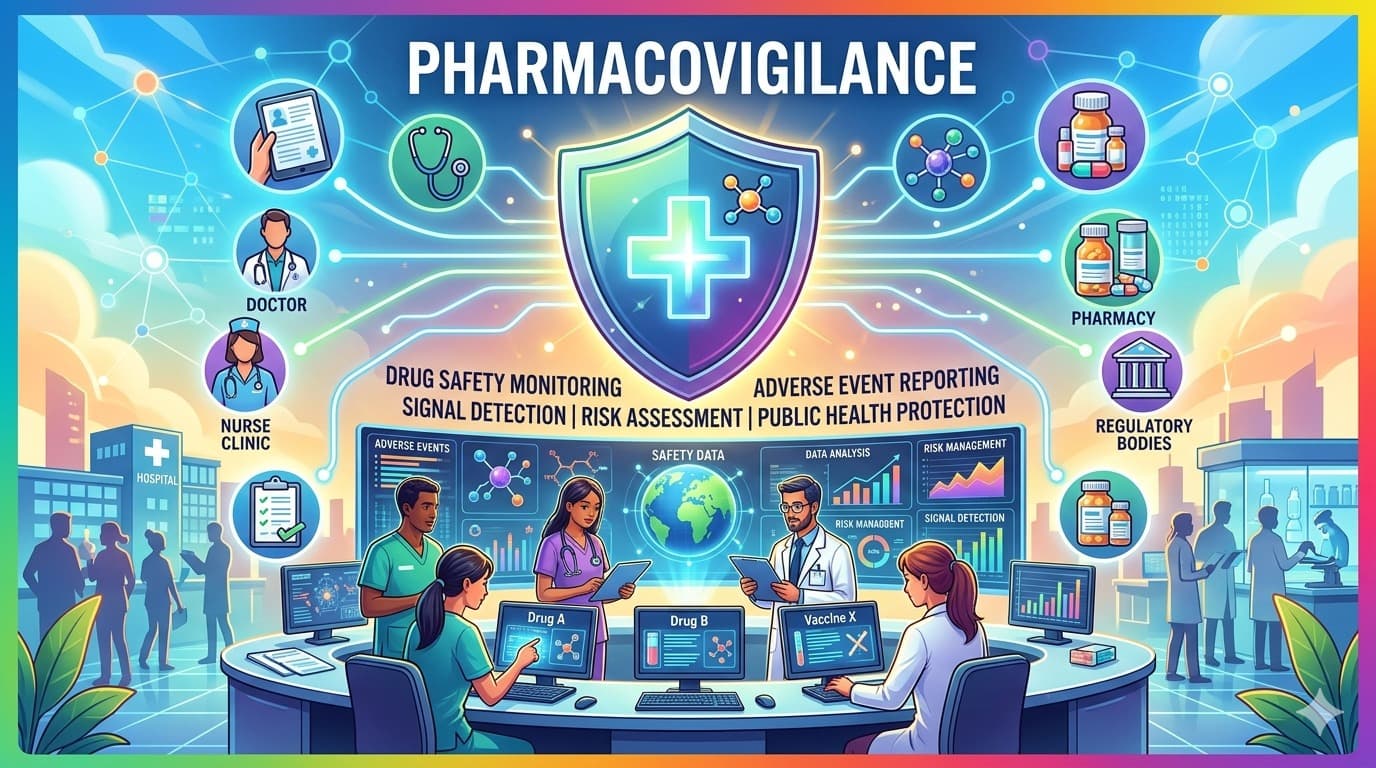
Pharmacovigilance is the science and activities related to the detection, assessment, understanding, and prevention of adverse effects or any other drug-related problems. The primary objective of Pharmacovigilance is to ensure patient safety and monitor the benefit-risk profile of medicinal products throughout their lifecycle.

Course Modules

Module 1: Introduction to Pharmacovigilance

  • Definition and History of Pharmacovigilance
  • Importance of Drug Safety
  • Pharmacovigilance Objectives
  • Scope of Pharmacovigilance
  • Drug Development Process
  • Clinical Trials Overview
  • Post-Marketing Surveillance
  • Healthcare Ecosystem and Stakeholders

Module 2: Drug Safety Basics

  • Adverse Event (AE)
  • Adverse Drug Reaction (ADR)
  • Serious Adverse Event (SAE)
  • Serious Adverse Drug Reaction
  • Unexpected Adverse Event
  • Severity vs Seriousness
  • Side Effects
  • Toxicity
  • Medication Errors
  • Product Quality Complaints
  • Lack of Efficacy
  • Off-Label Use
  • Overdose
  • Misuse and Abuse

Module 3: Pharmacovigilance Regulations

  • ICH Guidelines Overview
  • ICH E2A
  • ICH E2B(R3)
  • ICH E2D
  • ICH E2F
  • Good Pharmacovigilance Practices (GVP)
  • FDA Regulations
  • EMA Regulations
  • MHRA Overview
  • CDSCO Regulations (India)
  • WHO Pharmacovigilance Programme

Module 4: Individual Case Safety Report (ICSR)

  • Introduction to ICSR
  • Four Minimum Criteria
  • Valid Case Identification
  • Sources of Cases
  • Case Receipt Process
  • Case Processing Workflow
  • Follow-Up Information
  • Duplicate Case Detection
  • Case Lifecycle

Module 5: Case Processing

  • Case Intake
  • Triage Process
  • Data Entry
  • Medical Review
  • Quality Review
  • Submission Process
  • Follow-Up Activities
  • Case Closure Process
  • Compliance Timelines

Module 6: Medical Coding

  • Introduction to MedDRA
  • MedDRA Hierarchy
  • SOC
  • HLGT
  • HLT
  • PT
  • LLT
  • Event Coding
  • Product Coding
  • WHO Drug Dictionary
  • Drug Coding
  • Trade Name Coding
  • Generic Name Coding

Module 7: Causality Assessment

  • WHO-UMC Scale
  • Naranjo Scale
  • Certain
  • Probable
  • Possible
  • Unlikely
  • Unassessable Cases
  • Signal Identification Basics

Module 8: Aggregate Reporting

  • Periodic Safety Update Report (PSUR)
  • Periodic Benefit-Risk Evaluation Report (PBRER)
  • Development Safety Update Report (DSUR)
  • Annual Safety Reports
  • Safety Data Analysis

Module 9: Signal Management

  • Signal Detection
  • Signal Validation
  • Signal Prioritization
  • Signal Assessment
  • Signal Communication
  • Benefit-Risk Evaluation
  • Risk Minimization Measures

Module 10: Risk Management

  • Risk Management Plan (RMP)
  • Risk Identification
  • Risk Evaluation
  • Risk Mitigation
  • Risk Communication
  • Safety Monitoring Activities

Module 11: Pharmacovigilance Databases

  • Argus Safety Overview
  • ARISg Overview
  • Veeva Vault Safety
  • Safety Database Workflow
  • Electronic Reporting Systems

Module 12: Literature Surveillance

  • Literature Search Process
  • Scientific Publications Review
  • Case Identification from Literature
  • Literature Screening
  • Literature Case Processing

Module 13: Quality and Compliance

  • Quality Management System (QMS)
  • Standard Operating Procedures (SOPs)
  • CAPA
  • Audits and Inspections
  • Regulatory Compliance
  • Documentation Practices

Module 14: Pharmacovigilance Career Development

  • Pharmacovigilance Departments
  • Entry-Level Roles
  • Drug Safety Associate (DSA)
  • Pharmacovigilance Associate
  • Case Processor
  • Medical Reviewer
  • Signal Detection Specialist
  • Aggregate Reporting Specialist
  • Safety Scientist
  • Career Progression Path

Practical Training

Real-Time Case Processing Demonstration
MedDRA Coding Exercises
Narrative Writing
Seriousness Assessment
Expectedness Assessment
Causality Assessment
Follow-Up Handling
Quality Check Activities
Safety Database Demonstration
Mock Case Studies

Interview Preparation

🎯 Pharmacovigilance Interview Questions
🎯 HR Interview Preparation
🎯 Resume Building Guidance
🎯 LinkedIn Profile Optimization
🎯 Professional Communication Skills
🎯 Corporate Etiquette Basics

What You'll Achieve

Upon completion of this program, learners will gain a comprehensive understanding of Pharmacovigilance processes, drug safety regulations, case processing workflows, medical coding, aggregate reporting, signal management, risk management, and industry best practices used within global pharmaceutical organizations.